

An Overview of Shosa – Future Dialogue and Why It Matters

“Shosa-Future、ue-” is a joint research project of KiQ and ATR. It is an installation born from the idea of CEO Akane Kikuchi in 2019. “Shosa” means the behavior that expresses the mind. The project will be held at Kyoto ATR on June 11th. This time I report the pattern.
FutureSite Mapue
http://www.geminoid.jp/projects/shosa/
Futureue
https://www.youtube.com/watch?v=IvVypHfrDso&t=13s
SHOSA-Future-ue
“Shosa-Future。ue” is a joint research project of KiQ and ATR (International Telecommunications Research Institute, Inc.). The project began with a keen enthusiasm that CEO and Kikuchi met Hiroshi Ishiguro in Android research, such as Matsukoroid and others.
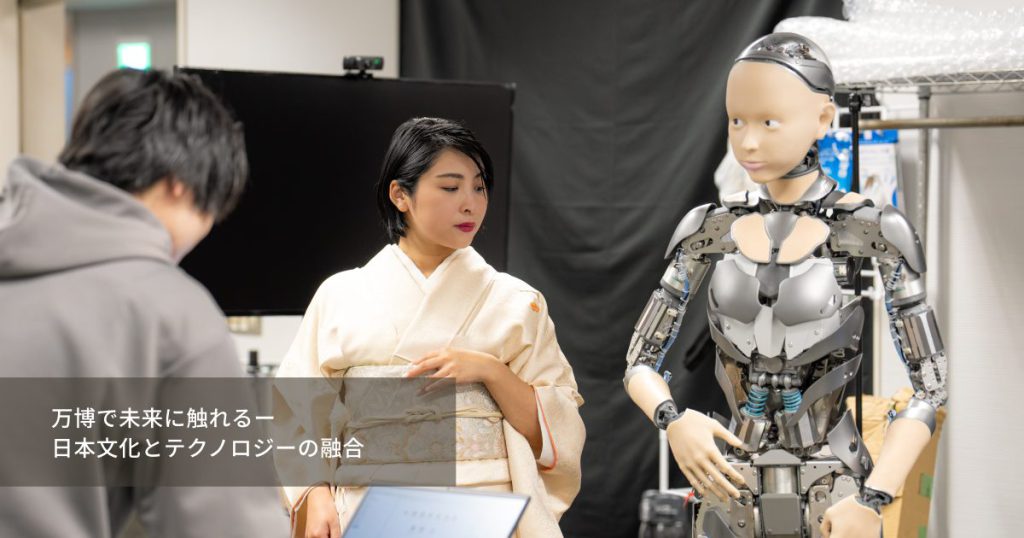
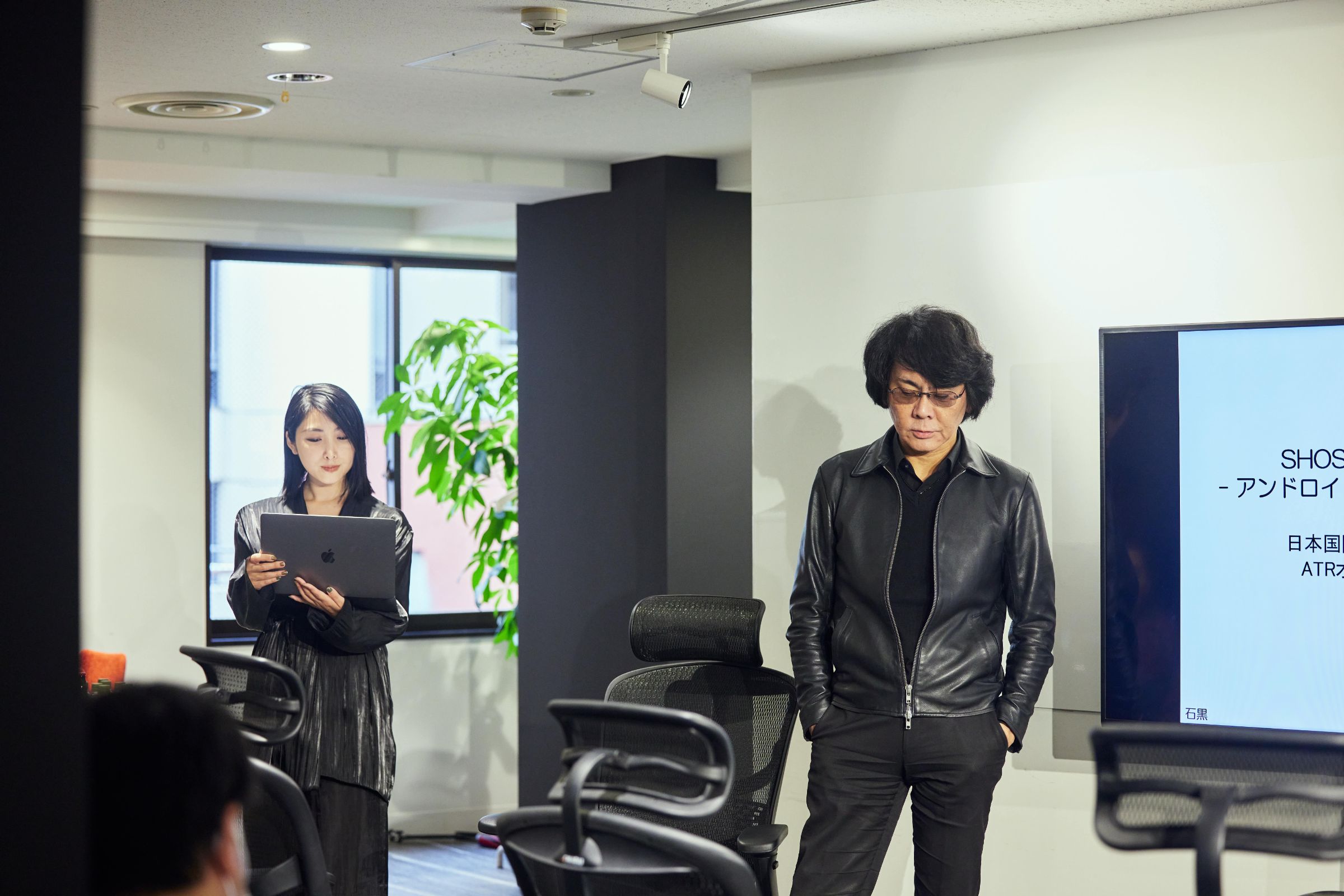
The event was held at ATR in Kyoto Prefecture on June 11th. In addition to the experience meeting, we also conducted a dialogue among project members involved in the production, and the pattern was delivered to Zoom. On the day, there were creators from various sectors, such as Sony, mainly researchers.
“Shosa-Future ue-” is one of the “beauty of mind” of human beings, and we believe that it is possible to express our work as one of the “beauty of mind”.
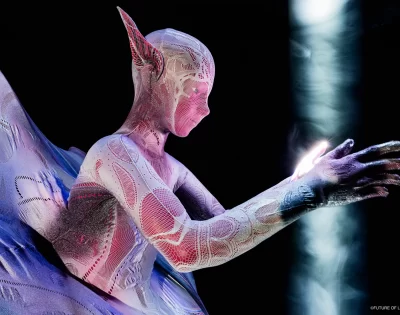
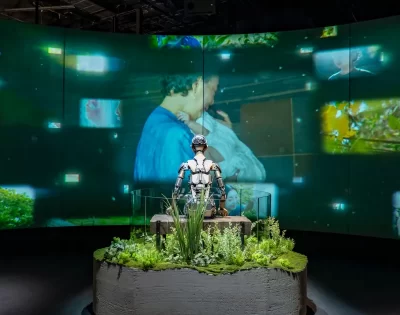
In this installation, the “Shosa” that appears in it will be expressed by continuously changing sound and light depending on the experience and theMovement movement. You can feel how human and evolve in the future by experiencing dialogue with Android.
Kikuchi: Do you want to solve social problems and robot problems in any way through “Shosa-Future ue”?
Hiroshi Ishiguro (hereinafter referred to as “Ishiguro”): The challenge of robots so far was difficult for humans to feel their heart through interaction with robots. I wanted to solve the problem with this installation. If you can realize a robot that feels mind, various household appliances that support human life will develop into a affinity with humans, and can realize a rich society for humans.
Kikuchi: How did you set your team’sHome?
Ishiguro: To understand humans by developing human-like robots. In particular, to reproduce the advanced co function of humans, such as “heart”, and to understand the advanced co Features function through its reproduction. This is a multimodal. So when robots become multimodal, they can be involved with humans. When humans and robots interact with their hearts, they become a rich relationship that can be compassionate with each other rather than simply the relationship between the primary relationship and the person who uses tools. In the previous research, we have made a basic function to move and chat robots, and we have never been able to express our hearts.
Kikuchi: Mr. Funayama and Mr. Mikata were in charge of interaction. Have you ever thought about your work?
Satoshi Funayama (hereinafter referred to as “Shizan”): The physical body of the individual is made to communicate in a multimodal systemic manner, and it can grow both mentally and physically. I think that the feeling of fulfillment that I obtained through such communication is a way of human life and richness. On the other hand, I think that there is no connection with people due to such communication and the connection of people. I think that robots can play a role to remind and train humans because they don’t have much communication between people in the current era. If you can, it seems that modern people whose daily routine is too convenient and have decreased the amount of exercise are similar to training directly in the gym.
Funayama: Communication between humans is actually ambiguous and continuous, which is not something that can be easily carved. On the other hand, ambiguous movement expressions on the middle and half edges are simply unknown in the case of a robot. So, in order to realize a human advanced behavior like a work, I thought that it is necessary to clear the nature of the behavior and combine the expression that there is more space for interpretation. By doing so, you can feel to the other party as if you are intentionally, or think about what this person is doing. I think there was a lack of technical shortcomings and lack of intended interaction images.
Kikuchi: I see. Mr. Sakuma was responsible for sound expression. How did you decide?
Sakuma Coast (hereinafter, Sakuma): In terms of sound effects, I think that there is a similar approach, but I think that it is the most advanced in terms of cooperation with robotics systems. I think that it is unique that the speed of collaboration with robotics is not in the past and pursues non-verbal and universal sound.
Kikuchi: What is the purpose of eliminating artist sex?
Sakuma: There is a logic that is easy to recognize, such as a major or minor, such as a bright feeling and a dark feeling. In that sense, we design sound that is considered to be a vague part such as the feeling that neither of them nor the transition. On the other hand, I think that the work creates ambiguity in the point of delegate understanding to the other party, and the part such as multi-step interpretation and co-creation is born. Well, there is no clear general tone in Oriental music, and tuning among the people who gather on the spot may be told to be important, but I think that intervening the ambiguity of the world is connected to the work in terms of “co-creation with the opponent”.
What is Shosa-Future?ue?
Kikuchi: Mr. Horibe was in charge of visual expression design. What results do you think of this project?
Kazuya Horibe (hereinafter referred to as “Horibe”): I think that this project provides concrete suggestions for design of various interfaces. In addition, I think that the design of the Android avatar will enrich the lives of people in the future.
Akan Kikuchi (hereinafter, Kikuchi): I would like to create an opportunity to think about communication with the Z generation and children who are suffering from loneliness that I felt when I was a child or feeling that an adult around is lying. In addition, I would like to raise a stone against youth problems such as improving the value of physical properties, and physical activity. The future of coexisting with robots is quite a bit ahead, but I want to share tips that lead to it and make prototypes work in the future.
–What kind of field should I be born?
Kikuchi: In addition to the youth problems we have mentioned, it is a matter of communication if you look comprehensively. For example, do you tell people of the relationship, such as lack of communication or misunderstandings, or that it is difficult to say such as privacy or complex, without hurting the other party? I want to connect to the creative perspective of services and products related to it.
— Have you ever been treated like this?
Kikuchi: I think that there are many kinds of genomics such as the work and the “○○-michi” and there aren’t many examples of creatives. In addition, there is a thing that contributes to sales by obtaining camera and movement from marketing perspective, but it is good to use it for the purpose base.
–How do you feel new as a creative area?
Kikuchi: I think Japanese and Japanese culture have been working to give lifeless things, but I think it is necessary to convert and implement it in modern times. Robot development is divided into the industrial level which is done by Earon Musk “Tesla Bots: Tesla Bots (akaIndustryus:us)” and the daily level, but there are many experiments that specialize in daily level rather than industrial level because of the difference in investment amount. Rather, I would like KiQ to show you the possibility of what to do when you push it.